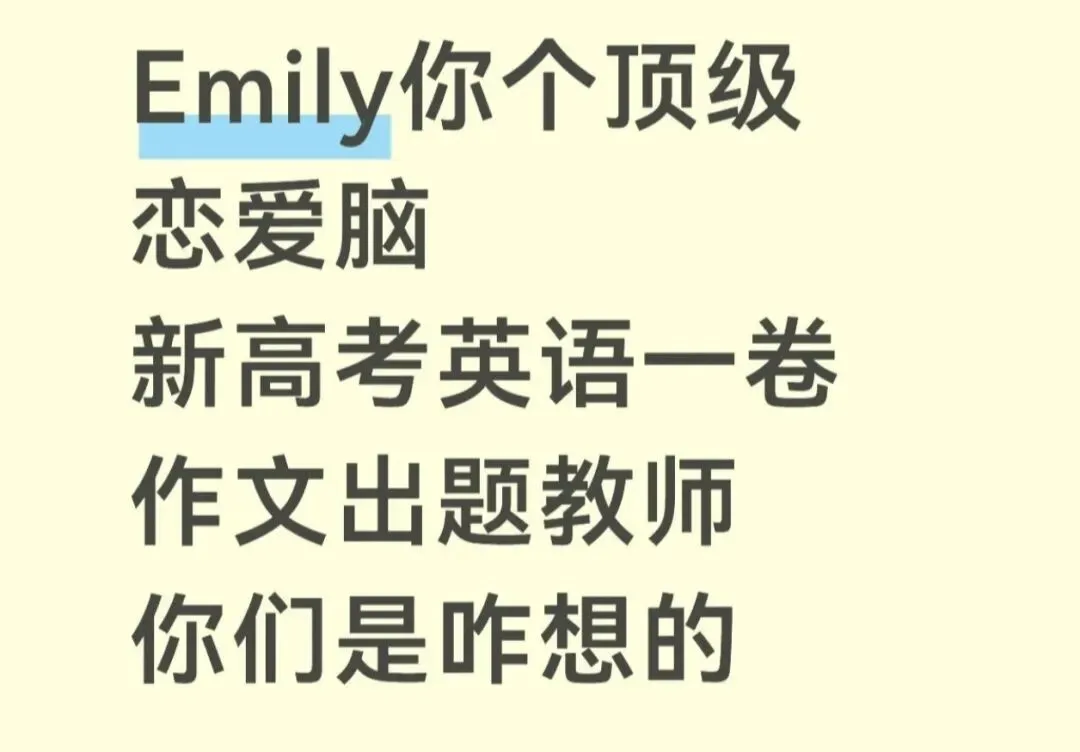
高考英语一卷一出,Emily的“恋爱脑”立刻引起了大家的热议,大家疑问“这么狗血的剧情为什么会出现在高考试卷上?”,还有人探究深层次原因:鼓励恋爱,提升人口数量。
如果仅停留在质疑和瞎猜阶段,大家真辜负了命题人的良苦用心。“恋爱脑”Emily只是引子,是反面教材,体现新课标关于中国学生的发展内涵才是命题人的真正用意——培养科学精神。且看新课标关于科学精神的表述:中国学生发展核心素养中的科学精神 (课标顶层依据)
理性思维:崇尚真知,尊重事实和证据,逻辑清晰,能运用科学方法认识事物、解决问题。
批判质疑:具有问题意识,能独立思考、独立判断,敢于质疑,善于反思。
勇于于探究:具有好奇心和想象力,不畏困难,坚持不懈,大胆尝试,积极寻求有效解决方法。
请把注意力放在理性思维和批判质疑这两个层面。感性和混沌无序是人的本能,理性和独立思考,独立判断是科学精神,把人从混沌状态转变到理性状态是教育的终极目的。 德国哲学家康德在《纯粹理性批判》中提出,人类的认识过程必须经历从“感性直观”(接受外界杂乱无章的刺激)到“知性/理性”(运用范畴进行逻辑整理)的过程。教育的本质之一就是完成这种跨越,使人获得理性的秩序。
看看Emily的认知的过程和阶段吧。
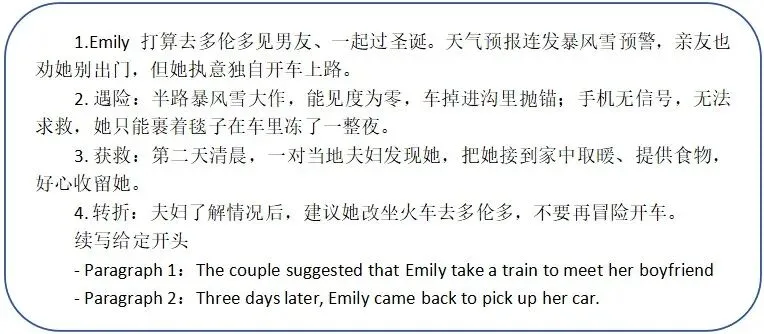
起因:爱情至上+不听劝阻(性格:冲动、固执、恋爱脑)
发展:暴风雪+车陷沟+无信号+被困一夜(后果:危险、无助、后悔)
转折:好心夫妇救助+劝改乘火车(善意+理性提醒)
续写材料部分主人公为了约会不顾自身安危,面对生命危险时还要见男朋友,恋爱脑到极致,代表了冲动,本能驱动,固执的人的混沌状态。(难怪吐槽一片,一般人都看不下去)
如果说前部分是主人公的无序和混沌状态,那么续写部分就要考验学生如何从感性走向理性。这里要考查学生的以下思维品质:
批判性思维---看清楚Emily行为不理性、忽视安全、不听劝阻。
逻辑思维----从恋爱脑走向理性,情节如何连贯,合理。
辩证思维----爱情很美好,但是更要敬畏自然,敬畏生命,听取别人的建议。
看清以上本质,续写部分自然就水到渠成了。所有的选择和举动都是从感性走向理性的从混沌到有序的转变。
情感变化:固执→恐惧→后悔→感恩→成长
行为变化:雪夜开车,一意孤行→车陷人困,险丢性命→得人救助,听从劝告→会将男友,得到劝慰→返回取车,理性反思
所以续写部分概要应该是:
Paragraph1:反思+改乘火车+赴约相见
Paragraph 2:返回取车+感恩反思+成长升华
结论:
续写考查的核心素养是什么?
续写考查的核心能力是理性思考,安全意识,感恩,方式式的自我成长,绝不是“恋爱脑”。
为什么考这个?
是新课标的关于中学生核心素养的体现,也是教育的本质和意义所在。
参考范文
Paragraph1
The couple’s kindness and advice made Emily realize her foolishness. Looking back, she felt ashamed of ignoring everyone’s warnings and risking her life for a reckless trip. She thanked the couple repeatedly and promised to take their advice. After resting for a while, she took a taxi to the train station. On the train, she watched the snow-covered scenery outside and reflected deeply. Love should never blind one’s eyes to safety and reason.When she finally arrived at Toronto, her boyfriend was waiting anxiously at the station. He hugged her tightly, relieving that she was safe,and said that he had expected that she had given up in such a violent night.
Paragraph 2
Three days later, Emily returned to the spot where she had been trapped to pick up her car. The snow had stopped, and the sun was shining brightly. With the help of local workers, her car was pulled out of the ditch successfully. Standing there, she thought of the kind couple again, whose warmth had saved her from danger. This experience taught her a valuable lesson: true love is not about blind devotion, but about rational care and mutual respect. From then on, she became more sensible and cautious, cherishing life and listening to others’ advice.